
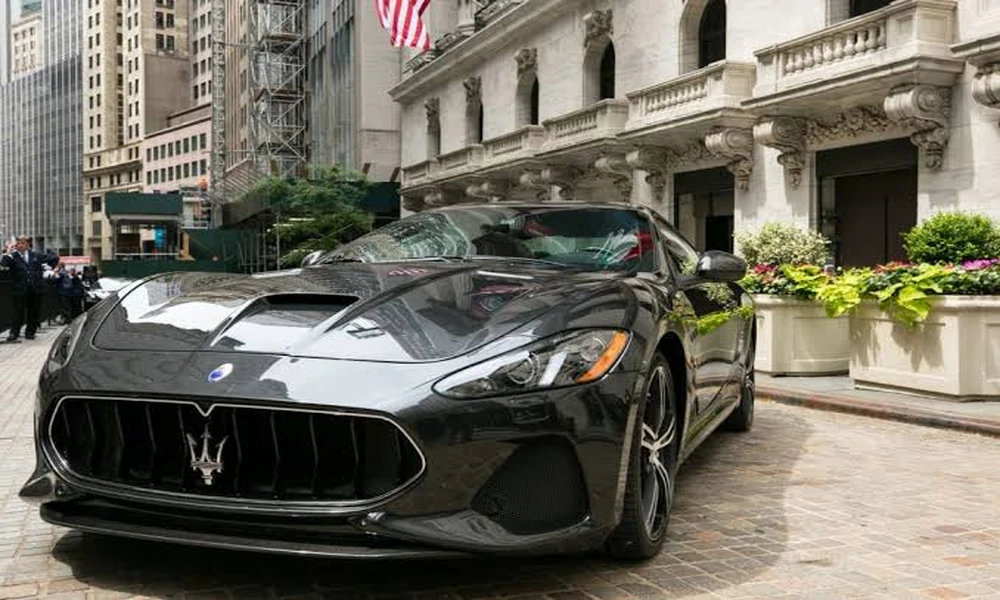
No other American city puts more exotic iron on public roads per capita than Miami. That’s not a vibe or a stereotype. It’s a market reality driven by a specific, traceable chain of events that has been compounding for over a decade. If you want to understand why Lamborghinis, Bentleys, and Mansory-tuned G-Wagons cluster in this city the way they do nowhere else in the country, you have to follow the money, the tax code, and the weather.
The Wealth Migration Flywheel
Miami’s luxury car density starts with who has been moving there. IRS migration data shows that filers earning $200,000 or more accounted for about 82% of Florida’s total net income gain from interstate moves, proving that the state’s tax-free status resonated most powerfully with high earners who had the most to save. That’s not a broad demographic trend. That’s a concentrated influx of exactly the kind of buyer who walks onto a supercar lot.
Call it the Wealth Migration Flywheel. High earners flee New York, California, and New Jersey for Florida’s zero-income-tax environment. They land in Miami, bring their assets, and spend those freed-up dollars on lifestyle goods, starting with real estate and almost immediately after that, cars. Miami’s millionaire population has grown by 50% over the past decade, driven by the city’s favorable tax policies and lifestyle options that transformed it into a premier hub for the wealthy. Each new arrival recalibrates what “normal” looks like on South Florida roads, and the next buyer follows that signal upward. The flywheel keeps spinning.
Americans were on the move in 2024, and many chose low-tax states over high-tax ones, with the latest commercial moving data confirming that the flow runs consistently from high-tax to low-tax states. Florida sits at the top of that funnel. According to the Tax Foundation’s 2026 analysis, Americans moved to low-tax states at a sustained pace through 2024, with Florida, Tennessee, and Texas capturing the majority of inbound migration from high-tax coastal states.
What the Numbers Actually Look Like on the Ground
Miami is now the second-largest U.S. ultra-luxury market behind Los Angeles by most measures, and the fastest-growing luxury car market in the country, driven by tax migration, year-round driving weather, and South Florida’s exotic car culture. That combination of factors is hard to replicate. Los Angeles has the population density but not the tax advantage. New York has the wealth but brutal winters and congestion pricing. Miami has all of the upside and almost none of the friction.
The geography concentrates demand, too. The market spans Miami Beach, Coral Gables, Coconut Grove, Brickell, Bal Harbour, and Pinecrest, with the Palm Beach corridor extending the wealth cluster north along the coast. Within that corridor, the density of high-net-worth households per square mile rivals anything outside Manhattan. The difference is that in Miami, those households actually drive.
“Since the pandemic, Miami has become a significant national and broad international market. The general tone is Miami is becoming more diverse in terms of its attractions to work and growing businesses.”
Liam Bailey, Global Head of Research at Knight Frank, as reported by AOL/Miami Realty coverage of Miami-Dade’s record luxury transaction data, 2024.
The Global Luxury Car Market Is Growing. Miami Is Growing Faster.
The global luxury car market was valued at USD 593.8 billion in 2025 and is expected to grow from USD 628 billion in 2026 to USD 1.09 trillion in 2035 at a CAGR of 6.3%, according to Global Market Insights. That’s a massive macro tailwind, but Miami isn’t just riding that wave. It’s outrunning it. The city’s growth in ultra-luxury vehicle transactions tracks the broader inflow of high-net-worth residents rather than the general market cycle.
For context on what that means at the street level: buyers shopping luxury cars for sale in Miami are browsing inventories that would look at home in Monaco. Mansory-customized Ferraris, factory-spec Lamborghini Revueltos, and hand-finished Rolls-Royce Phantoms. These aren’t vehicles with local buyer pools measured in the hundreds. They’re global products with local demand that punches far above Miami’s population weight.
Luxury automakers are responding with a surge of new EV models, from high-performance sedans to spacious SUVs, while the global luxury electric vehicle market is expected to grow at a 24.5% CAGR between 2023 and 2030, reaching USD 256.7 billion by the end of that period.
Miami’s buyer base sits squarely in the target demographic for those vehicles. Florida’s favorable infrastructure and year-round outdoor culture make EV ownership more practical here than almost anywhere else in the Sun Belt. According to the Global Market Insights 2025 report on the global luxury car market, electrification and lifestyle branding now rank among the two most significant demand drivers for the segment worldwide.
A Buyer Profile Unlike Any Other American City
Miami’s luxury car buyer in 2026 doesn’t fit a clean archetype. You’ve got legacy wealth that wintered in Palm Beach for generations, recently relocated finance professionals from Manhattan who traded their MetroCards for Porsche GTS leases, Latin American families with deep ties to the city’s real estate community, and a growing tech cohort who relocated post-2020 and never looked back. Each group brings different purchasing behavior. All of them are shopping at the top of the market.
| Buyer Segment | Primary Driver for Miami Move | Typical Vehicle Preference |
|---|---|---|
| Relocated Finance / Tech Executive | No state income tax, remote work flexibility | Performance sedans, SUV-format exotics |
| Latin American HNWI | Stable dollar assets, lifestyle access | Ultra-luxury brands: Rolls-Royce, Bentley |
| Legacy Florida Wealth | Generational ties, existing portfolio | Collector-grade and coachbuilt models |
| Entrepreneur / Founder | Business climate, exit-friendly tax policy | Hypercars, limited-edition variants |
What to Look For When Buying in This Market
Miami’s market isn’t just large. It’s fast-moving and specific. Here’s what matters if you’re navigating it seriously:
- Provenance documentation. Miami’s climate is gentle on paint and mechanicals, but the city sees a high volume of lease returns, prior rentals, and rebuilt-title vehicles moving through informal channels. Clean title history with documented service records from an authorized dealer is non-negotiable.
- Customization history. A Mansory or Brabus build done through an official program adds value and traces clearly. Aftermarket body kits with no certifying paperwork do the opposite. Always verify through the originating tuner’s records.
- Dealer authorization matters. The ultra-luxury segment in South Florida now includes several authorized specialists who carry factory-supported customization programs. That authorization changes the resale calculus in your favor.
- Timing relative to the seasonal buyer pool. Miami’s market heats up between October and April when seasonal residents and snowbirds arrive. If you’re selling, that’s your window. If you’re buying, you may have more negotiating room in summer.
The Road Ahead
Miami isn’t slowing down. The underlying drivers, favorable tax policy, wealth migration from high-cost states, an international buyer base, and year-round driving conditions, are structural rather than cyclical. Every hedge fund manager who closes on a Brickell penthouse is a potential showroom visitor within six months. The city has built a self-reinforcing ecosystem where luxury spending in one category signals permission for luxury spending in every other.
The question worth sitting with: as the global luxury car market continues its expansion through the decade, which city is better positioned to absorb that demand than one where the weather never gives you an excuse to leave the car in the garage?